 +(91) 8448822366
 neurohopesofficial@gmail.com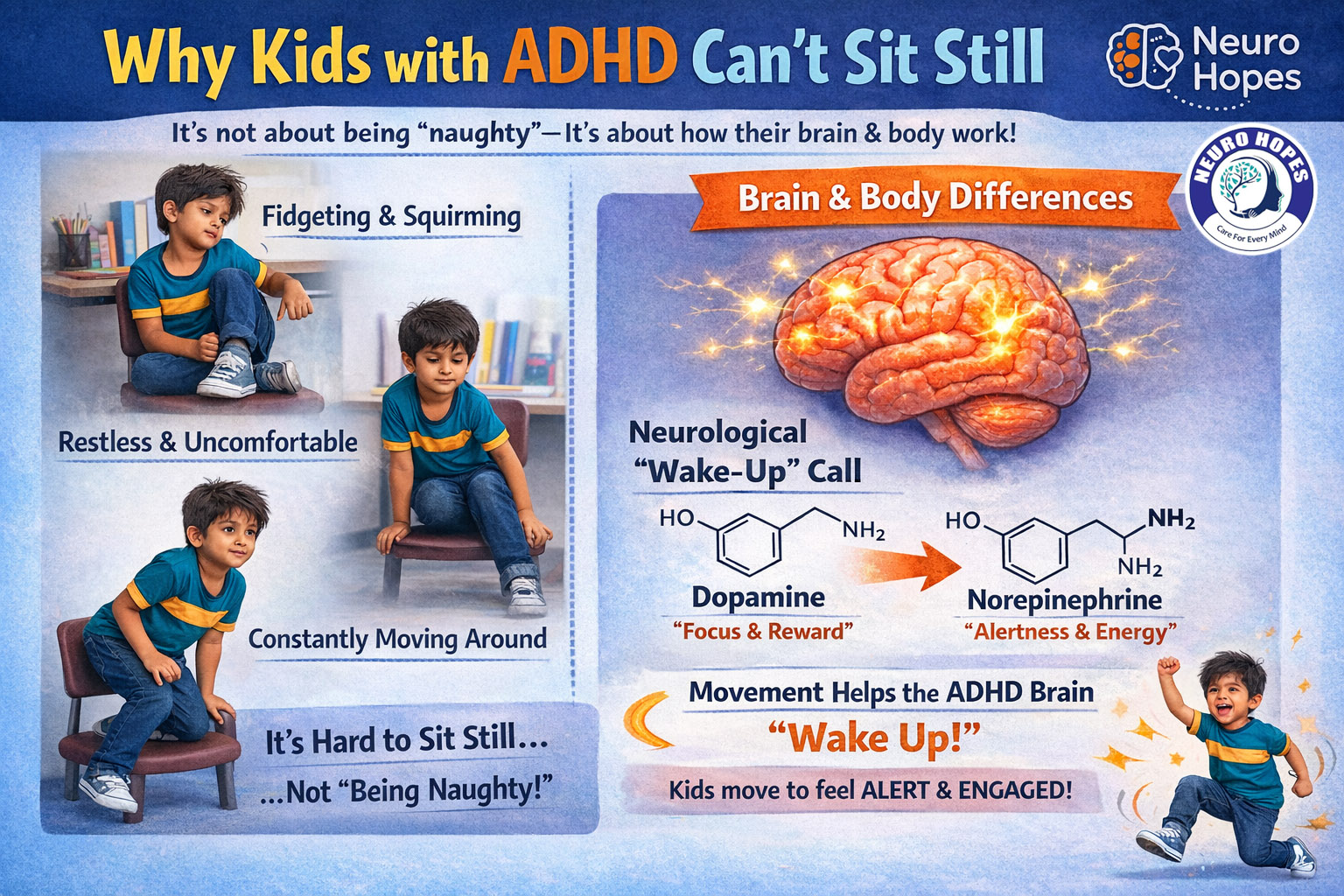
Why Sitting Still Feels So Difficult for Children with ADHD
1️⃣ Brain Chemistry & Self-Regulation
Children with ADHD often have lower levels of dopamine and norepinephrine, neurotransmitters responsible for focus and alertness. Movement acts as a natural “wake-up mechanism.”
Fidgeting, rocking, or shifting positions helps regulate attention. In many cases, movement actually improves concentration.
Common ADHD signs related to this:
Constant fidgeting
Difficulty remaining seated in class
Tapping hands or feet
Restlessness even during calm activities
2️⃣ Sensory Processing & Vestibular Needs
The vestibular system (balance and movement regulation) may function differently in children with ADHD. When the brain doesn’t receive enough movement input, the child subconsciously seeks it.
This explains behaviors such as:
Rocking on chairs
Spinning
Excessive shifting in the seat
Leaning or slouching
These are not disruptive choices—they are attempts at sensory regulation.
3️⃣ Low Muscle Tone & Core Stability Challenges
Some children with ADHD also experience motor coordination difficulties or low muscle tone. Sitting upright requires core strength and endurance. Without adequate postural stability, the child may:
Slouch frequently
Lean on the desk
Sit on their feet
Constantly reposition
Fatigue sets in quickly, making “proper sitting posture” hard to maintain.
4️⃣ Proprioceptive Feedback Needs
Proprioception helps us understand where our body is in space. Some children with ADHD seek deep pressure or joint input to feel grounded.
Sitting on their legs, pushing against furniture, or applying pressure provides calming sensory feedback.
5️⃣ Hyperactivity Component of ADHD
For children with Hyperactive-Impulsive ADHD, sitting still can feel physically uncomfortable—like holding back an itch. The internal drive to move is neurological, not behavioral.
What Makes the Struggle Worse?
Certain classroom or home conditions can increase restlessness:
❌ Chairs that are too high (feet not touching the floor)
❌ Long periods without movement breaks
❌ Overstimulating environments
❌ High cognitive load while trying to “sit still”
When a child uses all their mental energy to control movement, they have less capacity left for learning.
ADHD Early Signs Parents Should Watch For
If your child consistently shows:
Difficulty staying seated
Easily distracted behavior
Impulsivity
Poor posture or constant fidgeting
Academic challenges despite intelligence
Trouble following multi-step instructions
It may be beneficial to seek a professional ADHD assessment.
Early detection significantly improves long-term academic, emotional, and social outcomes.
How Neuro Hopes Adds Value in ADHD Detection & Treatment
At Neuro Hopes, our clinics in Indirapuram and Vikas Marg Road, Defence Enclave, Swasthya Vihar, New Delhi provide structured, evidence-based ADHD evaluation and therapy programs.
✔ Comprehensive ADHD Assessment
Developmental screening
Behavioral analysis
Cognitive and executive function testing
Sensory processing evaluation
✔ Multidisciplinary Intervention Approach
Our trained and experienced professionals include:
Child psychologists
Occupational therapists
Behavioral therapists
Special educators
✔ Individualized ADHD Treatment Plans
We focus on:
Attention enhancement therapy
Behavioral modification strategies
Sensory integration therapy
Parent guidance and counseling
School readiness and classroom strategy planning
✔ Strength-Based Model
Our goal is not to “change” a child’s personality—but to build self-regulation, confidence, social skills, and academic independence.
Why Early ADHD Intervention Matters
Research consistently shows that early diagnosis and structured therapy:
Reduces academic underperformance
Improves emotional regulation
Enhances peer relationships
Builds executive functioning skills
Prevents secondary issues like anxiety and low self-esteem
A Supportive Path Forward
At Neuro Hopes, we believe every child can grow socially and academically when supported with understanding, patience, and scientifically backed therapy.
We are committed to empowering children with ADHD to develop the skills they need to thrive confidently—at school, at home, and in life.
If you are noticing ADHD signs in your child, early professional guidance can make a meaningful difference.